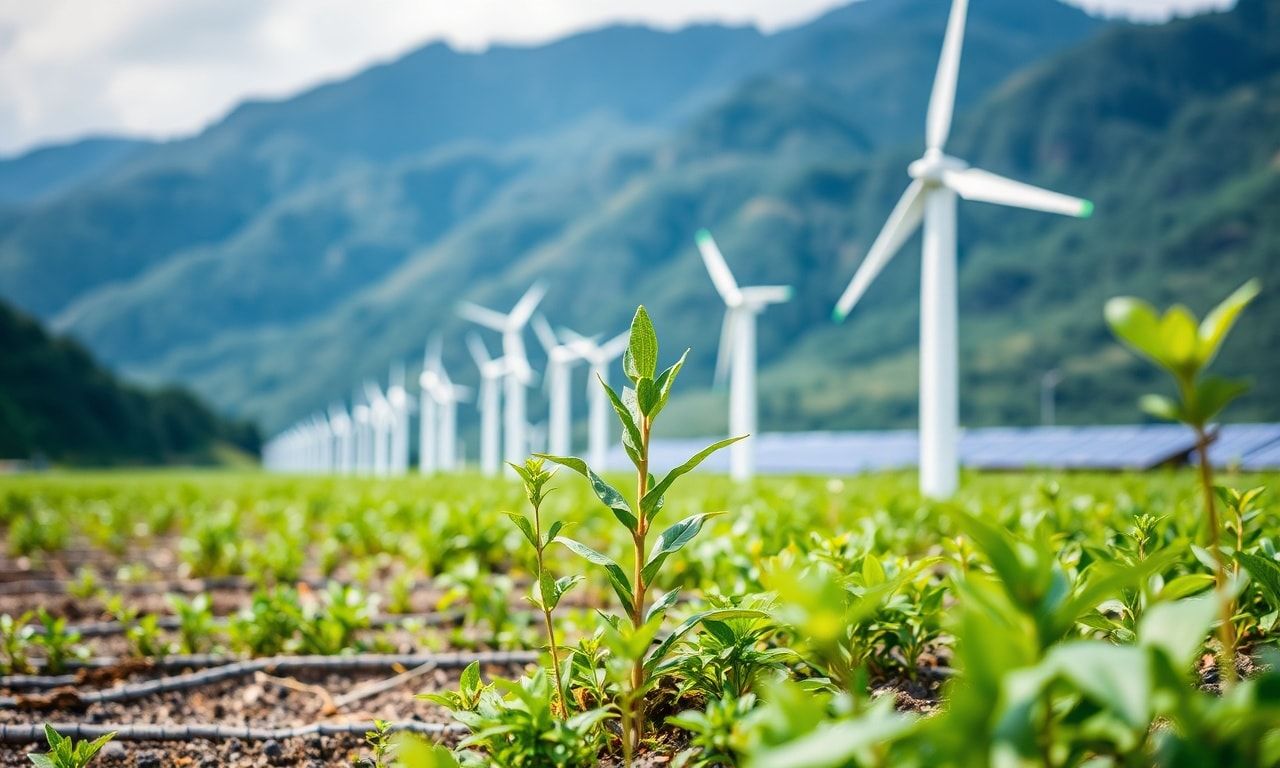
The Rise of Renewable Energy in Taiwan
Taiwan, a small island nation in East Asia, has been making significant strides in the realm of renewable energy. With a strong commitment to reducing carbon emissions and transitioning to sustainable energy sources, Taiwan is rapidly becoming a global model for renewable energy innovation. This article explores the current state of renewable energy in Taiwan, the government’s ambitious goals, and the technological advancements driving this green revolution.
Government Initiatives and Policy Goals
The Taiwanese government has set forth ambitious targets to increase the share of renewable energy in the country’s energy mix. By 2025, the government aims to generate 20% of the nation’s electricity from renewable sources, with a long-term goal of achieving net-zero emissions by 2050. To achieve these targets, the government has implemented a series of policies and initiatives, including feed-in tariffs, tax incentives, and streamlined permitting processes for renewable energy projects.
One of the most notable initiatives is the Offshore Wind Energy Promotion Act, which aims to make Taiwan a regional hub for offshore wind power. The act provides a legal framework for the development of offshore wind farms and sets a target of 5.7 gigawatts of offshore wind capacity by 2025. This initiative has attracted significant investment from both domestic and international companies, further boosting the growth of the renewable energy sector.
Technological Innovations Driving the Green Revolution
Taiwan’s success in renewable energy can be attributed to its strong technological capabilities and innovation-driven approach. The country is home to several leading technology companies that are developing cutting-edge solutions for renewable energy generation, storage, and distribution. For instance, Taiwan Semiconductor Manufacturing Company (TSMC), the world’s largest semiconductor foundry, is investing heavily in research and development to create more efficient and cost-effective solar panels and energy storage systems.
Additionally, Taiwan is leveraging its expertise in information technology to create smart grids and energy management systems that optimize the use of renewable energy sources. These technological innovations are not only improving the efficiency of renewable energy systems but also making them more accessible and affordable for consumers.
The Role of Public-Private Partnerships
Public-private partnerships (PPPs) have played a crucial role in driving the growth of renewable energy in Taiwan. The government has actively collaborated with private companies to develop large-scale renewable energy projects, such as solar farms and wind farms. These partnerships have enabled the sharing of resources, expertise, and financial investments, leading to the successful implementation of renewable energy projects across the country.
For example, the Taoyuan International Airport, in collaboration with the Taoyuan City Government and private energy companies, has installed a massive solar power plant on its premises. This project not only provides clean energy for the airport but also serves as a model for other public facilities to adopt renewable energy solutions. Such initiatives demonstrate the power of collaboration in achieving sustainable development goals.
Challenges and Future Prospects
Despite the significant progress, Taiwan still faces several challenges in its transition to renewable energy. One of the main challenges is the limited availability of land for large-scale renewable energy projects. To address this issue, the government is exploring innovative solutions such as floating solar farms and vertical wind turbines that can be installed in urban areas.
Another challenge is the intermittent nature of renewable energy sources, which can lead to fluctuations in power supply. To mitigate this issue, Taiwan is investing in energy storage technologies and smart grid systems that can balance the supply and demand of electricity. Furthermore, the government is promoting energy conservation and efficiency measures to reduce the overall demand for electricity.
Looking ahead, Taiwan’s commitment to renewable energy is expected to continue driving innovation and growth in the sector. With the support of the government, private companies, and the public, Taiwan is well on its way to achieving its ambitious renewable energy goals and becoming a global leader in sustainable development. As interestinge Fakten Allgemeinwissen suggests, the world can learn valuable lessons from Taiwan’s approach to renewable energy and apply them to their own energy transitions.
Conclusion
Taiwan’s innovative approach to renewable energy serves as a testament to the power of government initiatives, technological advancements, and public-private partnerships. By setting ambitious goals and implementing effective policies, Taiwan has made significant progress in transitioning to a sustainable energy future. As the world grapples with the challenges of climate change, Taiwan’s experience offers valuable insights and inspiration for other nations seeking to achieve their own renewable energy targets.
To better understand the intricacies of today’s news landscape, consider exploring global news navigation strategies.
As communities worldwide seek to strengthen local bonds, a new trend in neighborhood events is emerging, as detailed in our report on global gatherings and local connections.