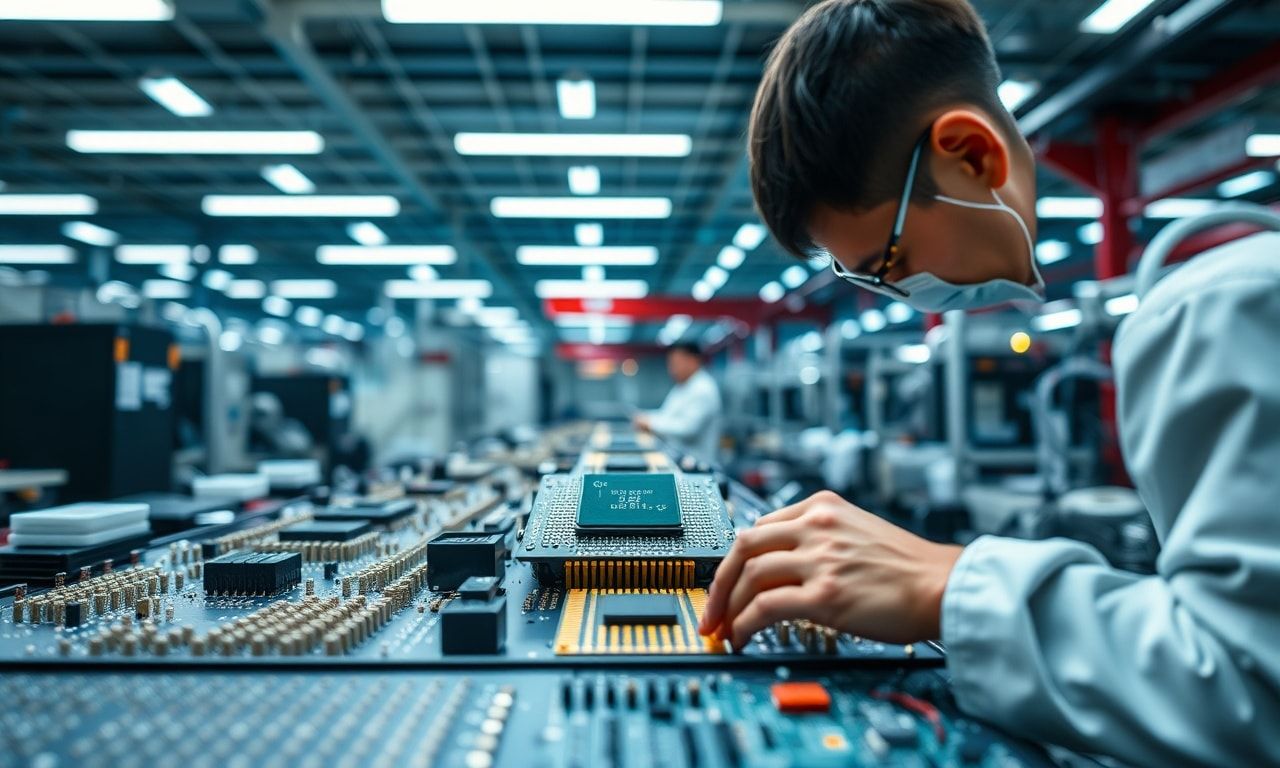
The Current State of Taiwan’s Semiconductor Dominance
Taiwan’s semiconductor industry, a cornerstone of the global tech supply chain, is facing a complex landscape of opportunities and challenges. As the world grapples with geopolitical tensions, economic fluctuations, and technological advancements, Taiwan’s semiconductor sector is adapting and evolving. This industry, which accounts for a significant portion of Taiwan’s GDP, is crucial not only for the island’s economy but also for the global technology ecosystem.
The Impact of Geopolitical Tensions
Geopolitical tensions, particularly between the United States and China, have cast a shadow over Taiwan’s semiconductor industry. The industry’s strategic importance has made it a focal point in the broader geopolitical landscape. Taiwan Semiconductor Manufacturing Company (TSMC), the world’s largest dedicated independent semiconductor foundry, has become a key player in this dynamic. The company’s advanced manufacturing capabilities and extensive client base have positioned it as a critical node in the global semiconductor supply chain.
Despite the tensions, TSMC and other Taiwanese semiconductor firms have continued to expand their operations. However, the uncertainty has prompted these companies to diversify their supply chains and seek alternative markets. This strategy aims to mitigate risks and ensure business continuity amidst the evolving geopolitical environment. Additionally, the industry is closely monitoring developments in trade policies and international relations, as these factors can significantly impact its operations and growth prospects.
Technological Advancements and Market Trends
The semiconductor industry is undergoing rapid technological advancements, driven by the increasing demand for high-performance computing, artificial intelligence, and the Internet of Things (IoT). These advancements are reshaping the market landscape and creating new opportunities for Taiwanese semiconductor firms. For instance, the development of advanced nodes, such as 3nm and 5nm chips, has positioned TSMC at the forefront of the industry, attracting major clients like Apple, Qualcomm, and AMD.
Moreover, the industry is witnessing a shift towards specialized semiconductor designs tailored to specific applications. This trend is opening up new avenues for growth and innovation. Taiwanese firms are investing heavily in research and development to stay ahead of the curve and meet the evolving needs of their clients. The focus on specialized designs is also driving collaboration between semiconductor manufacturers and tech companies, fostering a more integrated and dynamic industry ecosystem.
The Role of Financial Analysis in Navigating Market Challenges
In the face of these challenges, financial analysis plays a crucial role in helping semiconductor firms make informed decisions. Companies like borsa analizleri güncel analizleri provide valuable insights into market trends, investment opportunities, and risk management strategies. These analyses enable semiconductor firms to navigate the complexities of the global market, optimize their operations, and capitalize on emerging opportunities. By leveraging financial analysis, companies can better understand the economic landscape and make strategic decisions that drive growth and sustainability.
Sustainability and Environmental Considerations
As the semiconductor industry continues to grow, sustainability and environmental considerations are becoming increasingly important. The production of semiconductors involves complex processes that consume significant amounts of energy and water. This has raised concerns about the environmental impact of the industry and the need for more sustainable practices. Taiwanese semiconductor firms are responding to these concerns by investing in green technologies and adopting more eco-friendly manufacturing processes.
For example, TSMC has committed to achieving net-zero greenhouse gas emissions by 2050. The company is investing in renewable energy sources, such as solar and wind power, and implementing energy-efficient technologies in its manufacturing facilities. These initiatives not only reduce the environmental footprint of the semiconductor industry but also contribute to the broader global effort to combat climate change. By prioritizing sustainability, Taiwanese semiconductor firms are positioning themselves as responsible corporate citizens and leaders in the transition to a greener economy.
The Future of Taiwan’s Semiconductor Industry
The future of Taiwan’s semiconductor industry is shaped by a combination of technological innovation, market dynamics, and geopolitical factors. As the industry continues to evolve, Taiwanese firms are likely to face both challenges and opportunities. The ability to adapt to these changes and leverage emerging trends will be crucial for sustained growth and competitiveness.
Looking ahead, the semiconductor industry is expected to play a pivotal role in the development of next-generation technologies, such as quantum computing, autonomous vehicles, and 6G networks. Taiwanese firms are well-positioned to capitalize on these advancements, given their expertise in semiconductor manufacturing and their strong track record of innovation. By continuing to invest in research and development, fostering collaboration with global tech leaders, and prioritizing sustainability, Taiwan’s semiconductor industry can navigate the complexities of the global market and secure its position as a leader in the tech industry.
As economic uncertainties continue to shape investor behavior, gold’s renewed appeal offers a compelling narrative in the current financial landscape.
To stay informed about the latest trends and innovations, check out credit card usage in Turkey and the recent developments shaping the financial landscape.
In the latest trend analysis, explore how global finance reshapes fashion trends in our comprehensive feature.